


Spring plungers: A key component for many machines and devices
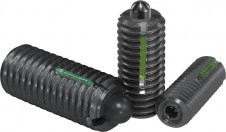
Spring plungers are an
essential component of many machines and devices. They are most commonly used
for clamping parts, but also for indexing or positioning. Choosing the right
spring plunger can significantly simplify your work with components or
workpieces. Despite their small size, spring plungers can replace
complex fixtures that are expensive and take up a lot of space.
Example of use:
The name “spring” plunger comes from its functionality. Inside the
housing is a spring that pushes a ball or a plunger pin outward. When
external force greater than the spring force is applied, the ball or pin
retracts back into the housing. This feature allows the product to be used in
a wide range of applications. Spring plungers are among our best-selling
products, therefore we continuously expand the range with new dimensions and
materials. To ensure the widest usability, we offer spring plungers in various
materials. In many designs, the entire housing with the spring-loaded ball is
not made from one material — the housing, ball, or pin can be made from
different materials, creating a wide selection of variants for different
applications.
The official name is “spring plungers”, but you may also know them as spring
screws, spring-loaded screws, ejector pins, or screws with a ball/pin.
Types of spring plungers by material
Plastic housings with spring-loaded ball
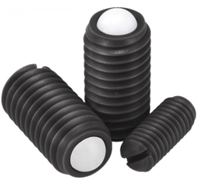
Advantages: lightweight, low cost, corrosion resistance.
Suitable for outdoor or humid environments.
Steel housings with spring-loaded ball
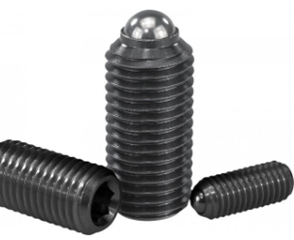
Advantages: stability, resistance to higher forces and
temperatures. Ideal for demanding environments.
Stainless steel spring plungers
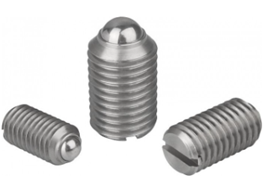
Advantages: corrosion resistance, suitability for higher
temperatures and outdoor use. Lighter than steel versions.
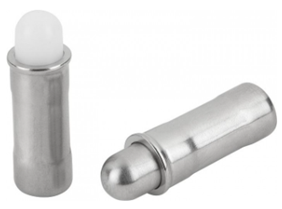
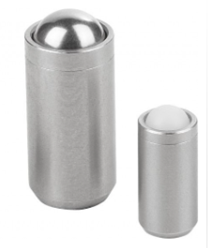
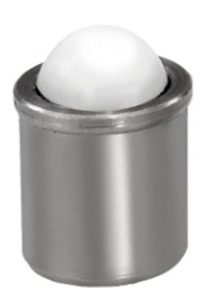
Smooth-design spring plungers
These plungers are designed for press-fit installation or insertion into
a hole instead of threading. They are available in stainless steel or plastic
(POM).
Additional features and installation
Available sizes
Spring plungers are manufactured according to standards and available in
sizes M5, M6, M8, M10, and M12. All available dimensions can be found on our
website, where you can use filters to select the correct type.
Installation
Depending on the application, spring plungers can be mounted in various ways.
Those with smooth housings can be press-fitted, manually pushed in, or inserted
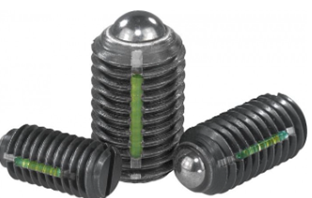
during the plastic injection molding process. Spring plungers with threaded
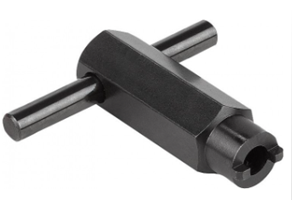
housings are installed using a standard screwdriver or hex key into a threaded
hole. For blind holes, spring plungers can be screwed in using a special tool.
To prevent loosening, they can be secured with nuts. For greater reliability,
however, it is recommended to use spring plungers with thread locking
(Long-Lok), which eliminates the need for additional nuts against loosening or
vibrations.
Spring force of the plunger elements
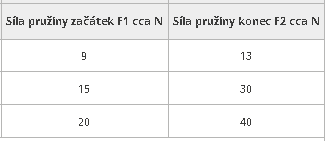
Spring plungers are produced with different spring forces. Depending on the
forces acting on the workpiece during machining, it is reasonable to choose the
appropriate spring strength. Each product includes the relevant force
specifications.
Ball or plunger pin?
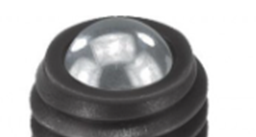
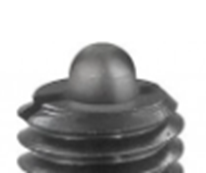
In the KIPP product range, you will find housings with a spring-loaded ball and
spring plungers with a plunger pin. Depending on the design, they are suitable
for different applications. Balls are very suitable for simple clamping and
locking operations. Plunger pins, on the other hand, are more often used as
ejector pins for pushing objects back out.
Selecting the correct spring plunger
When choosing the right spring plunger, it is important to
know:
- Dimensions (thread size, length, ball/pin travel)
- Material (steel, stainless steel, plastic)
- Drive type (slot, hex)
- Spring force (initial and final force)
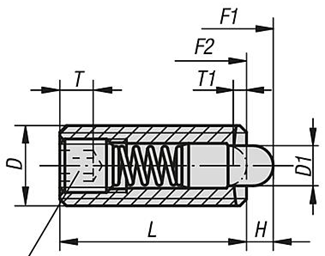
1) Material of housing/ball
a) Steelb) Stainless steel
c) Plastic (POM)
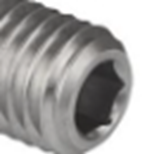
2) Drive type
a) Slot for screwdriver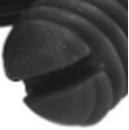
b) Hex socket
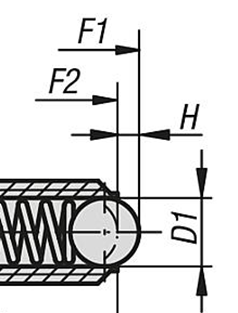
3) Spring preload (Spring force in Newtons)
a) Initial spring force F1 (Force at which the ball/pin begins to retract)b) Final spring force F2 (Force at which the ball/pin is fully compressed)
If you need assistance choosing the right spring plunger, do not hesitate to contact us via email or phone.
Related products
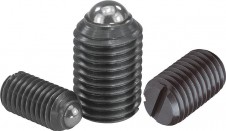
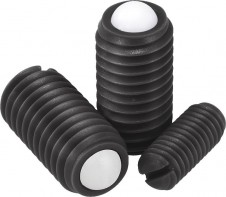
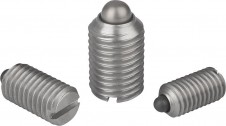
Spring plungers with slot and pin, stainless steelSpring plungers with slot and pin, stainless steel
 K0314
K0314
≪ Leveling casters – always perfectly level, no matter the floorClamps and clamping plates from norelem >