


How to reliably ensure the position of moving parts in automation
In automation, one problem keeps recurring regardless of the industry: how to ensure the position of moving parts reliably, quickly, and repeatably—without operator intervention and without compromising precision.
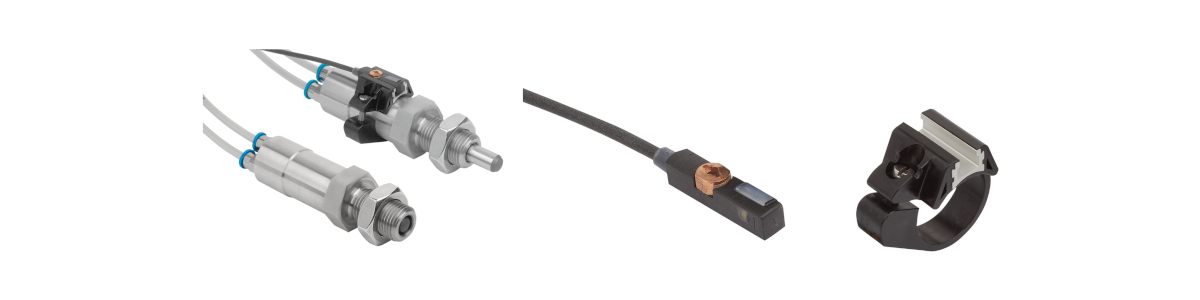
The solution is Kipp pneumatic locking pins. A structurally simple component with highly precise functionality: compressed air extends or retracts a hardened pin that mechanically locks a part in a defined position. No play, no overtravel, no dependence on the human factor.
Technical parameters
The pins are made of stainless steel, with the pin itself hardened and ground. A diameter range of 6–12 mm covers a wide spectrum of applications, from fine handling to heavy-duty industrial use. An operating pressure of 4–6 bar matches standard industrial air systems. Integration requires no special infrastructure modifications.
Three configuration variants are available:
✅ Variant A: single-acting design, pneumatically
extending
✅ Variant B: single-acting design, pneumatically
retracting
✅ Variant C: double-acting design for full control of
movement in both directions
Sensors and PLC feedback
A key practical detail: the pins can be equipped with PNP NO sensors (10–30 V DC) with a switching frequency of up to 3,000 Hz and IP67 protection. The result is immediate feedback on the actual pin status—the system knows whether locking is engaged before the next cycle step is initiated. This is essential not only for smooth automation but also for overall process safety.
Modular system
The pin itself is just one element. The real value comes from combining:
✅ K2202 –
pneumatic locking pin
✅ K2203 –
magnetic field sensor for status detection
✅ K2204 –
sensor holder with T-slot, compatible with standard cylinders
Each component is designed for seamless integration into modern control concepts, including direct connection to PLC systems.
Where it makes sense
Typical applications include locking of rotary and indexing tables, fixation of fixtures and grippers, positioning of carriers in conveyor systems, or precise alignment prior to machining and assembly. In packaging technology, this means repeatable positioning during format changes.
What it means in operation
In a well-designed system, the locking pin is an invisible component. No one thinks about it—until it is missing. Once implemented, it eliminates positional uncertainty, manual securing, operator errors, and time losses during changeovers. What you gain is repeatability within tight tolerances, increased safety, and process stability even under high loads.
This is exactly the kind of component worth considering before positional issues start showing up as scrap or line downtime.
➡️ MAREK Industrial – Solutions for applications where position must be identical every time.
≪ Southco A4 Slam LatchesElectric transport tricycle eTRIKE for people and materials >